Floral Vector Art Show Up Every Day with
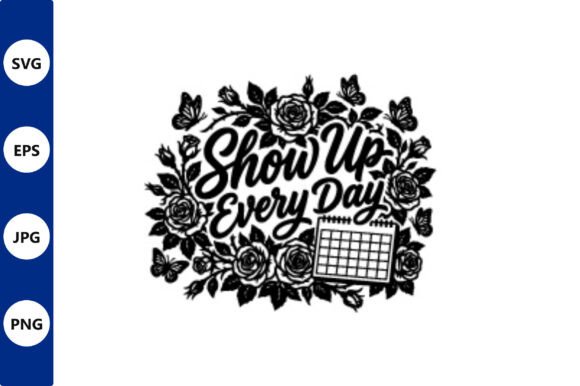
I have spent years turning digital files into tangible, stitched treasures. Whether I am prepping a custom embroidered patch for a boutique client or creating a personalized gift for a friend, the difference between a project that feels amateur and one that feels professional often comes down to the source design. Recently, I examined Floral Vector Art Show Up Every Day with, a bold black and white vector illustration featuring roses, a calendar, and butterflies. It is marketed as a premium bundle of high-quality graphics intended to convey daily motivation. But does it hold up when the needle starts moving? Let's break down how this design performs in real-world embroidery scenarios.
First Impressions: The Mood and Visual Personality
The moment you load Floral Vector Art Show Up Every Day with into your digitizing software, the layout speaks volumes. The combination of classic roses, fluttering butterflies, and a structured calendar creates a unique juxtaposition. It is not just a floral pattern; it is a statement about time, growth, and persistence. The bold black and white nature of the vector makes it incredibly versatile, but it also demands precision. In the world of machine embroidery design, high-contrast vectors are a double-edged sword. They offer clarity, but they can look harsh if the stitch density isn't managed correctly.
Visually, the design feels grounded yet airy. The roses provide a traditional anchor, while the butterflies suggest lightness and movement. This specific embroidery project has a personality that fits well in modern, minimalist home decor or contemporary streetwear. It avoids the cluttered, overly busy look that plagues many low-quality graphic assets. Instead, it offers clean lines that promise a crisp finished product, provided the underlying structure of the file is sound.
Real-World Application: From Screen to Stitch
To truly understand the potential of Floral Vector Art Show Up Every Day with, I like to visualize it on actual products. Imagine a small business owner preparing a collection of custom apparel for an Etsy shop. This design would be perfect for a tote bag design. The large canvas of a canvas tote allows the roses and butterflies to breathe without feeling cramped. When stitched in a solid black thread against a natural cotton background, the contrast is striking and professional.
However, let's consider a more intimate application, such as baby embroidery. A sweatshirt embroidery piece for a nursery gift could benefit from this motif. The theme of "showing up every day" resonates deeply with parents. If executed on a soft, light-colored fleece, the design adds a layer of sophistication that elevates a standard gift into a keepsake. The butterfly elements, if rendered with careful satin stitches, can catch the light beautifully, adding a subtle texture that flat prints simply cannot achieve.
For those looking at commercial embroidery projects, this design works exceptionally well on kitchen towels or aprons. The calendar element acts as a functional reminder, making it a practical addition to a chef's station or a home baker's workspace. The key here is how the stitch density interacts with the fabric texture. On a thick terrycloth towel, the fill stitches need to be robust enough to stand out, whereas on a smooth linen apron, the same design might require a lighter touch to prevent puckering.
Navigating Technical Challenges and Limitations
While the concept is strong, no design is without its pitfalls. As an experienced reviewer, I must point out where Floral Vector Art Show Up Every Day with requires caution. The first concern is the hoop size. If the design includes intricate details in the petals of the roses or the veins of the butterfly wings, attempting to stitch this in a small hoop will result in lost definition. Tiny lettering or complex corners are particularly vulnerable in high-density areas. If the vector relies on fine lines, ensure your digitizer converts these into appropriate running stitches rather than forcing them into tight satin fills.
Fabric choice is another critical factor. Stretchy fabrics, such as jersey knits used for t-shirts, present a risk. Without proper stabilizer techniques, the tension required to pull off the detailed vector art could cause the garment to warp or pucker around the edges. Similarly, dark fabrics require a different approach. While the black and white vector looks great on paper, stitching black thread onto black fabric eliminates the visual impact entirely unless you use a contrasting underlay or a specific color palette strategy. For dark backgrounds, you might need to digitize a reverse version or plan for a colored thread scheme that wasn't immediately obvious in the vector preview.
Curved surfaces like caps are also tricky. The calendar grid and the circular arrangement of the flowers may distort significantly if applied to a curved brim or front panel without significant reshaping. A flat pillow cover is a safer bet for preserving the geometric integrity of the calendar element.
Impact on Brand Value and Customer Trust
In the handmade product market, the quality of the embroidery directly correlates to customer trust. A sloppy digitized file can ruin a beautiful handmade product. Floral Vector Art Show Up Every Day with has the potential to elevate brand consistency. When a buyer sees a cohesive, well-stitched design on a tote bag or a holiday gift, they perceive the maker as professional. The motivational message reinforces the emotional connection, making the item feel personal and thoughtful.
This design is particularly effective for craft fair products or boutique branding. The imagery is universally appealing and doesn't rely on fleeting trends. However, the final aesthetic depends heavily on the thread colors selected. Sticking to the monochromatic theme maintains the bold, graphic look, while introducing pastels could soften the message, making it more suitable for a baby shower or spring-themed event. The decision you make here defines the tone of the finished product.
Practical Designer Notes for Success
Before you commit this design to a production run, there are several steps you must take to ensure success. First, always test the design on scrap fabric. This is non-negotiable. You need to see how the applique design elements (if any) or the fill stitches behave on your specific material. Check the thread color contrast by creating a mockup. Does the black thread pop against the fabric, or does it blend in too much?
Review the stitch density carefully. High-density areas can lead to stiff, uncomfortable textures, which is a common complaint with custom apparel. Confirm the hoop size requirements before starting your setup. If the design file format is unclear, reach out to the seller to ensure it is compatible with your embroidery machine. Do not assume compatibility; verify the technical specs.
Inspect small details closely. Are the butterfly wings distinct, or do they merge into a blob of pixels? Use proper stabilizer to support the fabric during stitching. Test the design in both black and white mockups to simulate the final look on different garments. Compare how it looks on light versus dark backgrounds to determine if color adjustments are needed.
Finally, confirm licensing terms. Many digital embroidery files come with restrictions on commercial use. If you plan to sell finished items featuring Floral Vector Art Show Up Every Day with, ensure you have the right to do so. This protects your craft business and ensures you are operating ethically. By taking these precautions, you transform a simple vector into a valuable asset for your creative portfolio.
Ultimately, this design is a strong candidate for anyone looking to add a touch of motivation and elegance to their embroidery work. With careful planning and attention to detail, Floral Vector Art Show Up Every Day with can become a staple in your collection of design assets.