Floral Circular Be the Good Vector: A Real Designer's Review
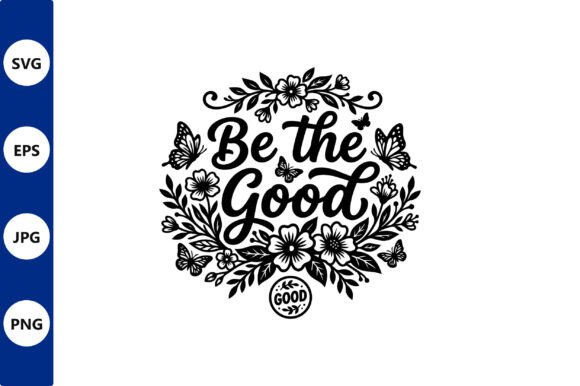
When I first opened the file for Floral Circular Be the Good Vector, I didn't just see a pretty image; I saw a potential bestseller for my next Etsy listing. As someone who spends hours tweaking stitch density and selecting thread colors, my initial reaction was one of cautious optimism. The description promises crisp line art with leaves and butterflies surrounding a central message, but does it translate well from a screen to a needle? In this review, I am putting this design through the wringer to see if it truly belongs in your commercial embroidery projects or if it is better suited for personal hobby work.
The First Impression: Mood and Visual Personality
The layout of Floral Circular Be the Good Vector immediately strikes me as balanced and inviting. The circular shape is a classic choice for embroidery because it frames the eye naturally, making it perfect for placement on chest pockets, tote bags, or even baby onesies. The phrase "be the good" feels timely and positive, adding an emotional layer that goes beyond simple decoration. It transforms a standard piece of fabric into a statement of values.
What stands out most is the combination of organic elements—the leaves and butterflies—with the geometric precision of the circle. This mix suggests versatility. It works equally well for a rustic, farmhouse-style apron or a modern, minimalist sweatshirt. The black and white nature of the vector means you have total control over the color palette once you digitize or stitch it. You aren't locked into a specific thread color scheme, which is a huge plus for small business owners who need to match their inventory.
Real-World Application: From Screen to Stitch
I recently tested this concept by planning a custom embroidered tote bag project for a local boutique client. The goal was to create a sustainable accessory that felt handmade yet professional. Using the Floral Circular Be the Good Vector as the base, I imagined how the satin stitch would handle the outer ring of the circle versus the fill stitches needed for the leaves.
In a real-life scenario, the circular design creates a focal point that draws attention without overwhelming the garment. On a canvas tote bag, the butterflies could be stitched in a contrasting pastel thread to pop against a dark background, while the text remains in a neutral tone. This design fits seamlessly into categories like holiday gifts, personalized products, and boutique branding. It has the kind of universal appeal that encourages impulse buys from customers looking for meaningful accessories.
However, the transition from digital graphic to physical object requires careful planning. If you are using this as an embroidery file for machine stitching, the crisp lines must be translated into appropriate stitch types. The running stitch might work beautifully for the delicate outlines of the butterflies, while the larger leaf shapes would benefit from a fill stitch to ensure coverage. The key is ensuring that the design doesn't look flat or sparse after the stitching process is complete.
Where Caution Is Required: Fabric and Hoop Limitations
While the design is versatile, there are specific scenarios where Floral Circular Be the Good Vector might struggle if not handled correctly. One major consideration is the hoop size. Because the design is circular, it requires a round or sufficiently large square hoop to capture the entire perimeter without cutting off the edges. Attempting to stitch this on a very small hoop size can result in a distorted circle or lost details at the top and bottom.
Texture is another factor to watch. If you plan to use this on a heavily textured fabric, such as a thick fleece or a boucle knit, the fine details of the butterfly wings might get lost in the weave. Similarly, thin fabrics require a robust stabilizer to prevent puckering, especially around the dense areas of the circular border. Stretchy fabrics like jersey t-shirts present a challenge; the tension required to keep the circle true can cause the fabric to warp unless you use a tear-away or cut-away stabilizer effectively.
Dense stitch areas are also worth noting. If the original vector has too much detail packed into a small space, the resulting embroidery could become stiff and difficult to wear. This is particularly important for apparel decorators working on custom apparel for children or pets, where comfort is paramount. Always inspect the small details before finalizing the design, and consider simplifying the line art if the stitch count becomes too high for the intended fabric weight.
Impact on Product Value and Brand Consistency
For craft business owners and Etsy sellers, the visual quality of the finished product directly impacts customer trust and brand consistency. A clean, well-executed Floral Circular Be the Good Vector elevates the perceived value of a handmade product. It signals professionalism and attention to detail, which are crucial for justifying higher price points in a competitive market.
When used correctly, this design enhances giftability. The positive message combined with the elegant floral motif makes it an ideal choice for wedding gifts, nursery decor, or thank-you presents. Customers are more likely to engage with a product that looks polished and thoughtful. Conversely, a poorly executed version with loose threads or misaligned circles can damage the reputation of a small shop. Therefore, treating this design asset with care is essential for maintaining a strong online presence.
Practical Notes for the Embroidery Designer
Before you commit to a full production run, I strongly advise testing the design on scrap fabric first. This allows you to evaluate thread color contrast and check how the stitch density interacts with your chosen material. Here are a few steps to ensure success:
- Check Thread Colors: Since the source is black and white, experiment with different thread combinations. High contrast usually yields the best results, but subtle tonal variations can add depth.
- Review Stitch Density: Ensure the fill stitches are not so dense that they distort the fabric, nor so sparse that the background shows through unwantedly.
- Confirm Hoop Size: Verify that your embroidery machine's hoop can accommodate the full diameter of the circular design without cropping.
- Inspect Small Details: Zoom in on the butterfly wings and lettering to ensure they will hold up under the pressure of the needle.
- Test Stabilizers: Use the proper stabilizer for your fabric type to prevent shifting and puckering during the embroidery process.
- Licensing Check: Confirm whether the license allows for commercial use if you intend to sell finished items or include this in digital product previews.
If you are creating printable mockups for your listings, this design offers a great opportunity to showcase your skills. A well-rendered image of the Floral Circular Be the Good Vector on a high-quality fabric can significantly boost buyer engagement. Just remember to compare light and dark fabric backgrounds to show customers exactly how the design performs in different contexts.
Final Thoughts on Design Assets
The Floral Circular Be the Good Vector is more than just a decorative element; it is a tool for storytelling. Whether you are creating an embroidered patch for a denim jacket, a cozy sweatshirt for a winter sale, or a delicate baby item for a new parent, this design provides a solid foundation. Its strength lies in its simplicity and adaptability, allowing you to infuse your own creative touch while maintaining a cohesive aesthetic.
As a designer, I appreciate the balance between artistic flair and practical application. However, success ultimately depends on your execution. Take the time to understand the limitations of your equipment and materials, and you will find that this design can elevate your handmade products to the next level. For those looking to expand their catalog of graphics and illustrations, this is a worthy addition to your collection of design assets.